Academy for Islamic Thought (AISTA) is dedicated to reviving the spirit of Islam and its teachings through the traditional modes of education in modern context with excellence.
Vision
Revitalizing Islamic Epistemology in Modern Contexts
Objectives
We strive to preserve Islamic faith and empower the global ummah through an education that is traditional and contemporary, rigorous and communal, authentic and contextual—cultivating responsible, impactful citizens of the world.
Strategic Initiatives
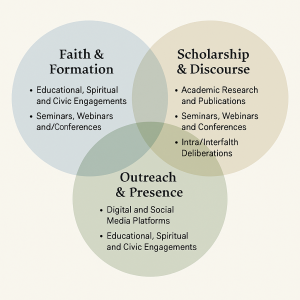
- Holistic Community Engagement
- Educational, spiritual, and civic programs fostering ethical development and communal responsibility.
- Knowledge Dissemination Platforms
- Seminars, webinars, and conferences promoting intellectual exchange and spiritual enrichment.
- Research & Publication Endeavours
- Academic studies, translations, and original publications contributing to contemporary and classical Islamic scholarship.
- Digital Outreach & Media Presence
- Leveraging social media and digital platforms to amplify educational impact and cultural discourse.
- Interfaith & Intra-faith Dialogues
- Facilitating thoughtful deliberations across theological lines to foster mutual understanding and unity.
Institutional Charter
In the spirit of sacred tradition and collective responsibility,
We affirm our commitment to nurturing communities grounded in knowledge, service, and ethical integrity. Guided by timeless wisdom and informed by contemporary realities, we endeavor to cultivate spiritual growth, civic engagement, and intellectual excellence.
Our initiatives reflect this mission:
- To foster educational, spiritual, and civic transformation through accessible programs and communal outreach;
- To promote knowledge dissemination via seminars, conferences, and dynamic learning platforms;
- To contribute to academic scholarship through rigorous research, insightful publications, and faithful translation;
- To embrace digital innovation in amplifying our values and engaging diverse audiences;
- To facilitate intra-faith and interfaith dialogue, nurturing empathy, respect, and mutual understanding across theological spectrums.
Through these commitments, we seek to harmonise tradition and modernity, scholarship and action, introspection and dialogue—toward a community that lives its values with purpose and vision.